

Steel Profile Comparison
Tuscan Secco vs. S40 vs. Classic Series
Which Steel Profile Is Right for Your Project?
Choosing custom steel windows and doors involves more than selecting a finish, glass pattern, or door configuration. The underlying steel profile affects the appearance, thermal performance, available applications, and overall investment required for your project.
The French Steel Company offers three primary profile options for residential and commercial projects:
Tuscan Secco Series: A premium thermally broken system for high-performance exterior applications.
Tuscan S40 Series: An ultra-slim, non-thermally broken system primarily intended for interior applications.
Classic Series: A versatile hot-rolled steel system that provides traditional steel character at competitive pricing.
Each series delivers the strength, craftsmanship, and architectural presence associated with custom steel. However, each is designed to solve a different combination of performance, design, and budget requirements.
This guide compares the three product series to help homeowners, architects, builders, and designers determine which profile best fits their project.
Steel Profile Comparison at a Glance
| Feature | Classic Series | Tuscan S40 Series | Tuscan Secco Series |
|---|---|---|---|
| Primary Profile Type | Hot-rolled steel | Hot-rolled steel profile | Cold-rolled galvanized Secco OS2 profile |
| Primary Application | Residential and commercial projects | Interior windows, doors, partitions, and specialty applications | High-performance exterior windows and doors |
| Thermal Break | Project- and configuration-dependent; confirm during specification | No | Yes |
| Sightline Style | Traditional and substantial | Ultra-slim and minimal | Slim, refined, and performance-oriented |
| Best Climate Fit | Determined by project requirements and glazing specification | Interiors or exterior use in moderate climates | Exterior use across a wider range of climates |
| Typical Design Style | Traditional, industrial, transitional, and contemporary | Minimalist, modern, and refined | Luxury modern, contemporary, traditional, and historically influenced |
| Common Applications | Entry doors, windows, pivot doors, bifolds, sliders, window walls, wine rooms, showers, and partitions | Interior doors, windows, partitions, wine rooms, cabinet doors, and interior bifolds | Exterior doors, windows, bifolds, sliders, French doors, pivot doors, and steel-and-wood windows |
| Relative Budget Position | Most value-oriented starting point | Specialty design investment | Highest performance and premium investment |
| Best For | Maximizing custom steel design within a controlled budget | Achieving the thinnest possible interior sightlines | Combining slim steel aesthetics with exterior thermal performance |
Budget positioning is relative rather than a fixed price ranking. Unit dimensions, operation, glass, hardware, finish, engineering, installation, and project location can significantly affect final pricing.
The Simplest Way to Choose
Choose the Classic Series when:
You want the character, durability, and customization of handcrafted steel while keeping the overall product investment as efficient as possible.
Choose the S40 Series when:
Your project is primarily indoors, and the thinnest possible steel sightlines are more important than thermal separation.
Choose the Tuscan Secco Series when:
You need a premium exterior steel system that combines narrow European-style profiles with a fully thermally broken frame.
Classic Series: Versatile Steel at Competitive Pricing
The Classic Series is The French Steel Company’s hot-rolled steel profile system. It is designed for clients who want authentic steel character, extensive customization, and broad application flexibility without automatically moving into the highest product tier.
The French Steel Company specifically positions its hot-rolled Classic Series as a competitively priced option that does not sacrifice quality or craftsmanship. The profiles can be incorporated into residential and commercial products with a variety of finishes, styles, and hardware selections.
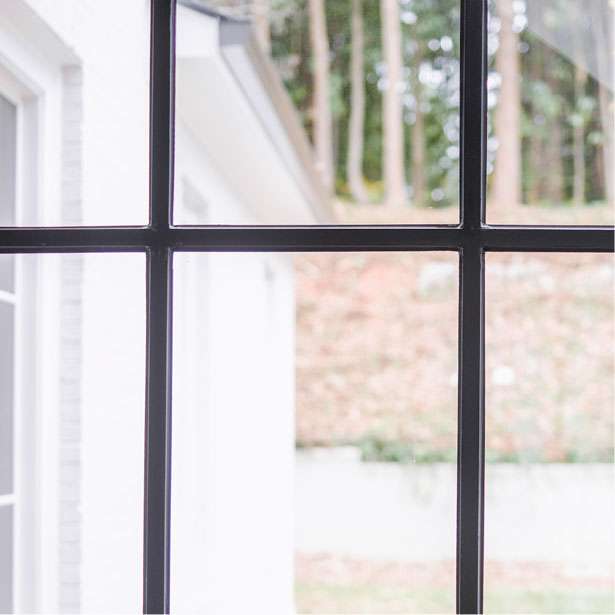
What Does Hot-Rolled Steel Look Like?
Hot-rolled steel often has a slightly more substantial visual presence than the narrowest cold-rolled European systems. This makes it well suited for projects where the steel frame is intended to be an intentional architectural feature rather than visually disappearing into the glass.
Depending on the configuration, the Classic Series can complement:
Traditional architecture
Industrial interiors
Modern farmhouses
Transitional homes
Historic renovations
Restaurants and hospitality spaces
Contemporary commercial buildings
Its more pronounced steel character works especially well when the designer wants the grids, mullions, and perimeter frames to contribute to the overall composition.
Best Uses for the Classic Series
The Classic Series offers one of the broadest collections of available product types, including:
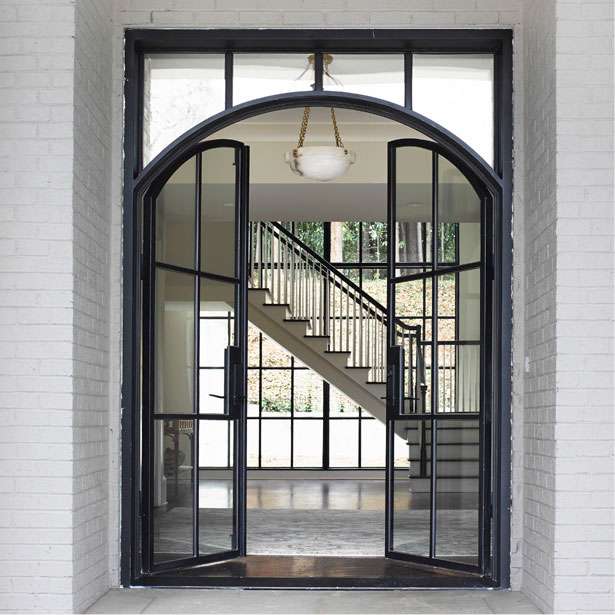
Steel entry doors
French doors
Steel pivot doors
Sliding steel doors
Bifold doors
Custom steel windows
Window walls
Steel glass partitions
Wine-room enclosures
Custom steel showers
Curtain-wall applications
This range makes the Classic Series a practical choice for whole-home packages, individual statement openings, commercial spaces, and projects requiring multiple custom configurations.
Classic Series Budget Position
The Classic Series is generally the best place to begin when budget is a major consideration but the project still requires genuinely custom steel windows or doors.
It allows clients to invest in the areas that matter most to their project—such as opening size, glass, hardware, or a statement entry—without necessarily selecting the premium Secco profile for every unit.
That does not mean every Classic Series unit will be inexpensive. Oversized panels, specialty glass, complex divided-light patterns, custom hardware, pivot systems, bifolds, and difficult installations can still create a significant investment.
However, when comparing similar custom openings, the Classic Series is intended to provide a more value-conscious entry into architectural steel.
Advantages of the Classic Series
Competitive positioning within the custom steel category
Traditional hot-rolled steel appearance
Broad range of door, window, and specialty configurations
Suitable for residential and commercial design
Strong choice for industrial, traditional, and transitional architecture
Extensive finish, glass, grid, and hardware customization
Ideal for projects where the steel itself should remain visually prominent
Considerations Before Choosing Classic
Clients who prioritize the narrowest available European sightlines or the most advanced exterior thermal separation may prefer one of the Tuscan systems.
Exact thermal performance should be evaluated based on the proposed frame, glazing, unit configuration, divided-light design, climate, and applicable energy-code requirements. The French Steel Company team can help determine whether a Classic configuration or a thermally broken Tuscan Secco system is more appropriate.
Tuscan S40 Series: Ultra-Slim Interior Steel Profiles
The Tuscan S40 Series is a non-thermally broken Secco profile designed primarily for interior steel windows, doors, and partitions.
Because interior openings do not normally separate a conditioned building from outdoor temperatures, they do not require the same thermal barrier as exterior windows and doors. Removing that thermal barrier allows the S40 profile to achieve exceptionally narrow steel sightlines.
The French Steel Company identifies the S40 as a non-thermally broken system that allows clients to use the thinnest possible sightlines inside a home or business. Recommended applications include window walls, interior doors, partitions, and wine rooms.
Why Designers Choose S40
S40 is often selected when the goal is to preserve openness between rooms while introducing subtle architectural definition.
The narrow frames and expansive glass help divide a space physically without making it feel visually enclosed. Light can continue traveling between rooms, sightlines remain open, and the steel provides enough structure to create a polished architectural feature.
The result is particularly effective in modern homes, offices, hospitality spaces, and luxury residential interiors.
Best Uses for the S40 Series
Interior Steel Doors
S40 doors can separate living rooms, dining rooms, offices, libraries, primary suites, and other interior spaces without blocking natural light.
Steel Glass Partitions
S40 partitions are well suited for open-plan spaces that need acoustic or functional separation while maintaining visual connectivity.
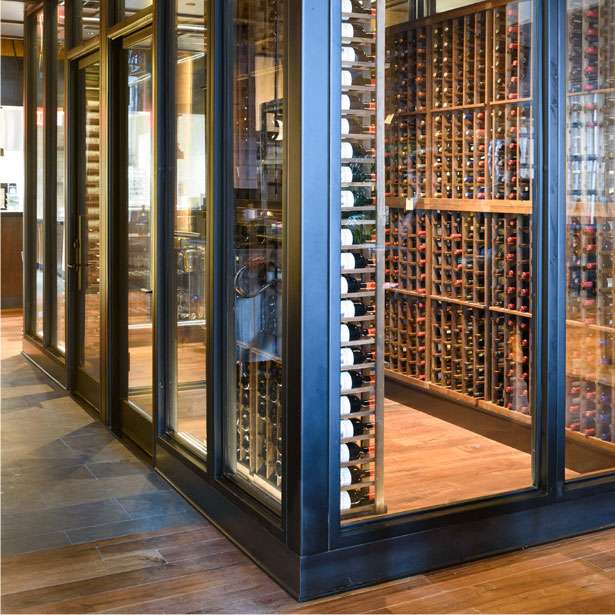
Wine Rooms
The profile’s narrow lines allow the glass and wine collection to remain the focal points. Custom clear or textured glass can provide different levels of visibility and privacy.
Home Offices
An S40 enclosure can create a dedicated workspace without making the office feel dark or disconnected from the surrounding home.
Interior Bifold Doors
S40 bifold systems can open or divide interior rooms while requiring less permanent floor area than a traditional swinging-door configuration. The French Steel Company describes these doors as an option for home offices, living rooms, and dining spaces where light flow and flexibility are important.
Steel Cabinet Doors
S40 can also be used for custom steel cabinet fronts, providing a coordinated profile for kitchens, bars, display cabinetry, and built-in storage.
Can S40 Be Used Outside?
The S40 Series is primarily intended for interior applications because it does not contain a thermal break.
The French Steel Company notes that S40 may also be considered for certain exterior applications in moderate climates where substantial temperature fluctuations are uncommon. However, it is generally not the preferred profile for exterior openings in regions that experience extreme heat, cold, or humidity.
Exterior use should be reviewed carefully based on:
Local climate
Building orientation
Interior humidity
Condensation risk
Energy-code requirements
Glass specification
Exposure to wind and rain
Whether the space is conditioned
For most climate-controlled exterior openings, Tuscan Secco is the more performance-oriented choice.
S40 Budget Position
S40 should not be viewed simply as the “less expensive Tuscan Series.”
Although it does not include a thermal break, it is still a highly refined specialty profile. The final cost can vary significantly depending on the size, finish, glass, hardware, operation, installation, and number of units.
S40 is best understood as a design-driven investment. Clients choose it because the project calls for extremely thin interior sightlines—not merely because they are looking for the lowest price.
Advantages of the S40 Series
The thinnest sightlines among the three profile options
Clean European-inspired appearance
Excellent natural-light transmission
Ideal for interior doors, windows, and partitions
Creates separation without visual heaviness
Available for specialty applications such as wine rooms and cabinetry
Suitable for modern, minimalist, contemporary, and transitional interiors
Considerations Before Choosing S40
The frame is not thermally broken.
It is primarily intended for interior use.
Exterior use should be limited to suitable climates and approved applications.
Ultra-slim profiles may not create the heavier industrial appearance some clients prefer.
Final pricing depends more on the complete unit design than on the profile alone.
Tuscan Secco Series: Premium Thermally Broken Exterior Performance
The Tuscan Secco Series is the premium exterior profile offering from The French Steel Company.
It is manufactured using Secco Sistemi’s OS2 cold-rolled galvanized steel profile system. The standard Tuscan line is based on the OS2 65 profile, which uses a multi-piece interlocking frame to hold the glass while helping control airflow and air intrusion through the assembly.
Unlike the S40 profile, Tuscan Secco includes a thermal break. This separation reduces direct heat transfer through the metal frame, making it a more suitable choice for exterior windows and doors in climate-controlled buildings.
What Is a Thermally Broken Steel Profile?
Steel is naturally conductive. In a traditional continuous steel frame, exterior heat or cold can travel through the metal toward the interior surface.
A thermally broken profile separates the interior and exterior portions of the frame with a lower-conductivity material. This helps reduce heat transfer, supports more consistent interior surface temperatures, and can lower the risk of condensation when the entire unit is properly specified.
The French Steel Company positions Tuscan Secco as an energy-efficient, thermally broken system developed for luxury exterior doors and windows.
Best Uses for the Tuscan Secco Series
Tuscan Secco is particularly well suited for:
Exterior French doors
Custom steel entry doors
Exterior steel windows
Steel pivot doors
Sliding steel doors
Exterior bifold systems
Large glass openings
Whole-house window and door packages
High-end residential construction
Luxury renovations
Architect-specified commercial projects
Projects in climates with meaningful seasonal temperature changes
The series is available in hinged, sliding, bifold, and pivot configurations, allowing architects and homeowners to carry a consistent profile throughout a large project.
Tuscan Secco Sightlines and Appearance
Tuscan Secco combines relatively narrow sightlines with the additional depth and internal components required for exterior thermal performance.
It will generally not appear quite as minimal as the non-thermally broken S40 profile, but it provides a refined alternative to heavier conventional window and door framing.
This makes Tuscan Secco attractive to clients who want:
A sleek steel-and-glass appearance
High glass-to-frame proportions
European profile detailing
Narrow exterior frames
Strong architectural definition without excessive visual weight
Better alignment between design and building-performance goals
Steel Exterior With Wood Interior
Tuscan Secco can also be manufactured with steel on the exterior and custom wood cladding on the interior.
This option provides the durability and refined lines of exterior steel while introducing the warmth of natural wood inside the home. It can be especially effective in traditional residences, country estates, historic-inspired homes, and interiors where exposed steel may feel too contemporary.
Impact-Rated Tuscan Secco Options
For hurricane-prone and coastal applications, The French Steel Company also offers Tuscan Secco in Florida-approved impact specifications. Available configurations can include hinged, sliding, bifold, and pivot systems, depending on project requirements and the applicable approval.
Impact-rated products must always be selected according to the project location, opening size, design pressures, installation conditions, local code requirements, and applicable product approval.
Tuscan Secco Budget Position
Tuscan Secco typically represents the largest investment of the three profile families.
The increased cost reflects factors such as:
Premium Secco profile materials
Thermally broken frame construction
Galvanized cold-rolled steel
More complex profile assemblies
Exterior sealing and performance requirements
Insulated glazing
Specialized hardware
Engineering and testing requirements
Premium architectural detailing
Tuscan Secco is usually the right investment when exterior performance and slim steel aesthetics are both non-negotiable.
Advantages of the Tuscan Secco Series
Fully thermally broken profile
Designed for high-performance exterior applications
Refined, narrow European-style sightlines
Cold-rolled galvanized steel construction
Available in multiple door and window configurations
Suitable for large luxury residential packages
Steel exterior and wood-clad interior options
Impact-rated configurations available for qualifying projects
Strong balance of design, durability, and energy performance
Considerations Before Choosing Tuscan Secco
It is generally the highest-investment profile option.
The added thermal components create a deeper profile than S40.
Product configuration may be influenced by testing and engineering limitations.
Impact, energy, and structural requirements may affect available sizes and operations.
Premium hardware, glazing, and installation should be included when establishing the project budget.
How the Three Series Are Similar
Although their profiles and ideal applications differ, all three series are built around the same central design principle: creating custom steel windows and doors that combine strength, glass, and architectural flexibility.
Custom Dimensions and Configurations
The French Steel Company can design products around the project rather than requiring every opening to conform to a standard retail size.
Available customization may include:
Overall unit dimensions
Door handing and operation
Window operation
Mullion and divided-light patterns
Sidelites and transoms
Fixed and operable combinations
Glass type
Steel finish
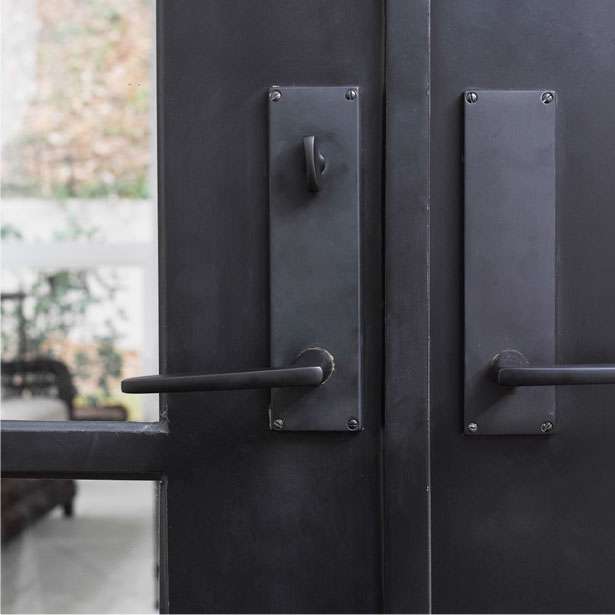
Hardware selection
Threshold and sill details
Final availability depends on the selected series, engineering, unit size, operation, glass weight, and code requirements.
Residential and Commercial Applications
The company manufactures products for both homes and commercial environments. Depending on the profile, the systems can be used in residences, offices, restaurants, hotels, retail spaces, educational buildings, hospitality projects, and specialty commercial applications.
Custom Glass
The French Steel Company offers glass selections based on privacy, natural light, safety, architectural design, and exterior performance requirements.
Available options include clear, textured, insulated, tempered, laminated, impact-resistant, decorative, and other specialty glass products. The company notes that glass panels can be insulated and tempered for safety, with laminated impact-resistant options available for qualifying coastal applications.
Finish and Hardware Options
Each profile can be coordinated with project-specific finish and hardware selections, although compatibility varies by product and operation.
Popular visual directions include:
Matte black
Dark bronze
Oil-rubbed bronze
Pewter-inspired finishes
Antique copper tones
Custom architectural colors
Finish and hardware decisions should be made early enough to confirm compatibility with the selected profile, door operation, locking system, and project schedule.
Professional Design and Installation Support
The French Steel Company provides support for the design, manufacturing, and installation of custom steel products.
Early coordination is especially important for:
Rough openings
Structural support
Floor and threshold transitions
Drainage
Waterproofing
Hardware preparation
Wall thickness
Finish-floor elevation
Electrical access for automated hardware
Installation sequencing
Which Series Provides the Best Value?
The best value is not automatically the profile with the lowest initial price. It is the profile that delivers the required appearance and performance without paying for features the project does not need—or omitting features it does.
Best Value for a Budget-Conscious Custom Steel Project
Classic Series
Classic is the strongest starting point when the client wants custom steel construction, broad design flexibility, and competitive pricing.
Best Value for an Interior Design Feature
Tuscan S40
Using a thermally broken exterior profile inside a conditioned space may add cost and frame depth without providing a meaningful benefit. For interior openings, S40 can deliver a more refined visual result by using a profile designed around minimal sightlines.
Best Value for Exterior Performance
Tuscan Secco
A less expensive non-thermally broken frame may not be a true value if it creates comfort, condensation, or energy-performance concerns in an exterior opening. In demanding climates, investing in Tuscan Secco may provide the better long-term fit.
Can Multiple Series Be Used in One Project?
Yes. A mixed-profile strategy can help control the project budget while using each system where it provides the greatest value.
For example, a project might use:
Tuscan Secco for exterior windows and doors
S40 for interior offices, wine rooms, and glass partitions
Classic Series for selected architectural features or openings where a more substantial steel appearance is preferred
The profiles do not need to be identical to create a coordinated project. Consistent finishes, grid proportions, glass, and hardware can establish a unified visual language across different systems.
This approach is especially valuable for whole-house packages and large commercial projects.
Questions to Ask Before Selecting a Profile
Is the opening interior or exterior?
This is the most important starting point. Interior applications generally do not require a thermal break, while exterior openings often benefit from one.
What climate will the product be installed in?
Temperature extremes, humidity, sun exposure, wind, and precipitation should influence the profile and glass specification.
How narrow do the sightlines need to be?
For the thinnest possible interior profile, S40 is the leading choice. For narrow exterior lines with thermal separation, Tuscan Secco is generally the better fit.
Is the steel intended to stand out or disappear?
Classic offers a more pronounced steel presence. S40 creates the lightest visual expression. Tuscan Secco balances slim detailing with exterior performance.
Are there energy-code requirements?
Exterior windows and doors may need to meet project-specific thermal, air, water, structural, or impact criteria.
What operations are required?
Pivot, hinged, sliding, bifold, fixed, and operable-window configurations have different profile, hardware, size, and engineering requirements.
Is the project in a hurricane-prone region?
Impact requirements may significantly affect the available profile, glass, hardware, installation, and unit dimensions.
What is the total installed budget?
The budget should account for more than the steel frame. Glass, hardware, finishes, engineering, freight, installation, waterproofing, and jobsite conditions all contribute to the finished cost.
Frequently Asked Questions
Which steel profile is the least expensive?
The Classic Series is generally the most value-oriented starting point. However, the final price depends on dimensions, operation, glass, finish, hardware, installation, and design complexity.
A simple S40 interior door may cost less than a large Classic pivot or bifold system, so pricing should always be based on comparable units.
Which profile has the thinnest sightlines?
The non-thermally broken S40 profile is intended to provide the thinnest possible sightlines for interior doors, windows, and partitions.
Which profile is best for exterior windows and doors?
Tuscan Secco is generally the strongest option when a project requires an exterior thermally broken steel profile with narrow sightlines.
Classic may also be considered for appropriate applications, but the exact configuration and required performance should be reviewed with the French Steel team.
Can S40 be used for exterior doors?
S40 is primarily an interior system. It may be considered for certain exterior applications in moderate climates, but it is not the preferred option for buildings exposed to extreme temperatures or demanding thermal requirements.
Which series is best for a wine room?
S40 is an excellent choice for wine-room doors and glass enclosures because it offers extremely slim frames and clear visibility into the space.
Classic can also be used when the design calls for a more substantial or industrial steel appearance.
Which series is best for a luxury entry door?
Tuscan Secco is ideal for premium exterior entry doors where thermal performance and refined sightlines are priorities.
Classic is a strong alternative when the client prefers a heavier steel presence or wants to manage the project budget.
Which profile is best for historic architecture?
The correct profile depends on the original window proportions, project requirements, and performance goals.
Classic can provide an authentic, substantial steel appearance, while Tuscan Secco can offer narrow lines with modern thermal performance. Grid patterns, muntin dimensions, finish, glass, and surrounding architecture should all be reviewed before selection.
Are impact-rated options available?
The French Steel Company offers impact-rated products, including qualifying Tuscan Secco and Classic Hurricane Impact configurations. Product approvals, sizes, design pressures, glass, and installation requirements vary by opening and location.
Does thermally broken mean the entire unit is automatically energy-code compliant?
No. The frame is only one part of the complete assembly.
Overall performance also depends on the glass, spacer, divided-light design, unit size, weatherstripping, operation, fabrication, installation, and testing. Project-specific requirements should be confirmed before ordering.
Find the Right Steel Profile for Your Project
There is no single steel profile that is best for every opening.
The right choice depends on where the product will be installed, how it should look, what performance it must provide, and how the complete package fits within the project budget.
Choose Classic for versatility, traditional steel character, and competitive value.
Choose S40 for ultra-slim interior doors, windows, and partitions.
Choose Tuscan Secco for premium thermally broken exterior performance.
The French Steel Company works with homeowners, architects, designers, builders, and commercial teams to evaluate each opening and develop a custom product package.
Contact The French Steel Company to discuss your plans, compare profile samples, and receive recommendations based on your project’s architecture, climate, performance requirements, and budget.
Request a Custom Steel Window and Door Consultation